Ashlee Jenae Is Another Victim Being Blamed For Her Own Death


The details are still coming into focus, but here’s what we know so far.
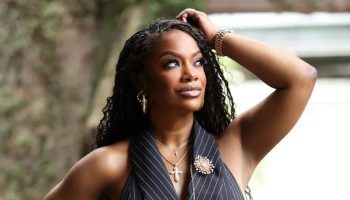
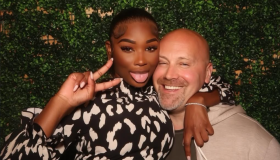
Ashly Robinson, a 31-year-old influencer who went by Ashlee Jenae, died while on vacation in Zanzibar, Tanzania. She had been traveling with her fiancé Joe McCann, and in the days leading up to her death, her social media showed what looked like a celebration: a birthday, an engagement, a trip that, at least publicly, appeared joyful.
Then something shifted.
Reports indicate that the couple had a serious argument, were placed in separate rooms by the hotel staff, and hours later, she was found unresponsive in her room. Authorities have suggested the death may have been a suicide, but her fiancé is being questioned, his passport has reportedly been held, and her family is pushing back hard against the idea that she would take her own life.
In other words, the case is unresolved. The cause of death is contested. And the truth, at this moment, is still incomplete.
That hasn’t stopped the internet.
Within hours, the story stopped being about a woman who died under unclear and troubling circumstances. It became something else entirely: a referendum on interracial dating, Black women and loyalty, anti-Blackness, and on who deserves sympathy and who does not. There’s an unspoken calculus happening online right now: there’s a penalty for loving outside the race, and if the worst happens, you treat it like a consequence instead of a tragedy.
If you’ve spent any time online since the news broke, you’ve seen the shift. Old photos have resurfaced. Screenshots—some verified, many not—began circulating. People started making claims about her dating history, her alleged preferences, and her supposed statements about Black men. And just like that, Ashlee Jenae was no longer a person at the center of an ongoing investigation. She became a symbol, a lesson, and a warning.
For some, the narrative hardened quickly into this is what happens when Black women “choose whiteness” and speak negatively about Black men. For others, the response was immediate defense: how dare anyone bring up her past, real or imagined, when she has just died.
Both reactions are understandable, but neither is sufficient. Because what we are witnessing is not just discourse, but a whole lot of projection.
Let’s be clear about something first. There is a real and troubling dynamic that many Black people recognize, which is the phenomenon of some Black folks who enter interracial relationships and then perform anti-Blackness as a kind of social currency or “upgrade.” We’ve all seen it. The jokes, the tweets, the dismissiveness, the casual or not-so-casual denigration of Black partners in favor of proximity to whiteness. That dynamic is not imaginary, and it most certainly deserves critique.
But critique is not the same thing as retroactive condemnation. And it is certainly not the same thing as using a Black woman’s death, especially one that is still under investigation, as proof of a cultural argument we were already eager to make. Nobody deserves to die because of who they dated. Nobody’s death should be repurposed into a morality play about “what you get.”
And yet, that is exactly what is happening.
What makes this moment so revealing is how quickly empathy becomes conditional. Before we know the cause of death, before investigators have reached any firm conclusions, before her family has even had space to grieve, people are already sorting her into categories. Good Black woman. Bad Black woman. Loyal. Disloyal. Deserving. Undeserving.
That sorting process tells us far more about us than it does about her.


Because Ashlee Jenae is being asked, in death, to carry the weight of multiple unresolved conversations within Black communities about dating, racial identity, internalized racism, respectability, and betrayal. And social media, with its speed and its appetite for narrative, is more than happy to collapse all of that into a single, digestible storyline.
We’ve seen a version of this before, but the reaction wasn’t the same.
In 2025, a Black man named Telvin “Telbo” Osborne was shot and killed by his white girlfriend in Georgia after an argument. She claimed it was an accident. She was charged. And then a grand jury declined to indict her, meaning no one was ultimately held criminally responsible for his death. At the time, his name circulated online not just because of how he died, but because people resurfaced his past derogatory remarks about Black women. In one post, he said he’d rather sleep with a dog than sleep with a Black woman.
And yes, some people responded by saying they didn’t feel sympathy. But what didn’t happen, at least not at this scale, was turning his death into a sweeping moral lesson about interracial dating. Nobody built a viral, unified narrative that said this is what happens when Black men date white women. Nobody used his body as a warning to discipline an entire group’s romantic choices.
But here we are now. A Black woman is dead, and before the investigation is even complete, her death is being framed as consequence. Same pattern. Interracial relationship, anti-Black comments, tragic death. Different verdict.
Right now, there are still critical questions that have not been answered. What exactly happened in that hotel room? What was the nature of the argument that reportedly preceded her death? What evidence supports, or contradicts, the preliminary assessment of suicide? What will an autopsy reveal? Will charges be filed? These are the questions that should be driving public attention.
Instead, we are watching a different kind of investigation unfold on the internet. It’s a crowd-sourced excavation of a woman’s digital footprint, assembled piece by piece to support whatever conclusion people have already decided to reach. And that is where this becomes dangerous.
Because when people begin to build narratives out of incomplete information, those narratives harden quickly and become resistant to correction. They shape how future facts are interpreted. If new evidence emerges, it will not be received neutrally. Instead, it will be filtered through the story people have already told themselves about who she was and what she represents. That is how truth gets distorted and how harm multiplies.
If it turns out that Ashlee Jenae was the victim of violence, then the rush to frame her death as a consequence of her choices will have functioned as a kind of preemptive absolution that will shift the focus away from accountability and onto her character.
And if it turns out that her death was, in fact, a suicide, then the current discourse becomes even more unsettling. Because it means that people have taken a woman who may have been in profound distress and transformed her into a cautionary tale about dating preferences and racial loyalty.
Either way, the impulse is the same: to make her life and death mean something that serves us. And that impulse is worth interrogating.
Why are we so quick to turn Black women into symbols? Why do we feel the need to extract lessons from their lives, especially in moments when the facts are not yet clear? Why does empathy so often hinge on whether we approve of their choices, their intimate partners, and their perceived alignment with community expectations?
These are not new questions. But moments like this bring them into sharp relief. Because at the center of all this noise is a simple, uncomfortable truth: a woman is dead, and we do not yet fully understand why. The screenshots, the speculation, and the debates about interracial dating is secondary. Or at least, it should be.
There will be time for deeper conversations about anti-Blackness, about dating dynamics, about how people perform identity in public and private. Those conversations absolutely matter. But they require care, context, and a commitment to truth.
What they do not require is a dead body.
So before we rush to draw conclusions, or decide what Ashlee Jenae’s life and death “mean,” it might be worth asking different questions: Are we actually seeking understanding? Or are we simply looking for confirmation of what we already believe?
SEE ALSO:
Ashly Robinson’s Fiancé In Custody, Family Launches GoFundMe
What Happened To Ashlee Jenae? Family Of Influencer Seeks Answers After Mysterious Death
Ashlee Jenae Is Another Victim Being Blamed For Her Own Death was originally published on newsone.com