Trump Spent $500K To Put An Enslaver’s Statue Back Up
Trump Spent $500K In Taxpayer Money To Put An Enslaver's Statue Back On MLK's Plaza

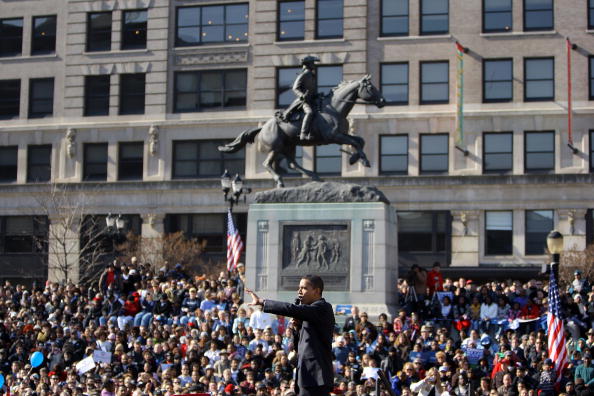
The Trump administration has reportedly spent more than half a million dollars to reinstall a statue of slave owner and Founding Father Caesar Rodney in Washington, D.C., ahead of America’s 250th anniversary celebrations. The controversial statue was placed in Freedom Plaza, which was renamed in 1988 to honor Martin Luther King, Jr.
How much did Trump spend on the statue of slave owner Caesar Rodney in Washington, D.C.?
According to documents obtained by Mother Jones, the National Park Service awarded an expedited, no-bid contract totaling $527,226 to install the monument in Freedom Plaza, just blocks from the White House. The outlet reports the final cost was nearly double the government’s original estimate.
The statue, which depicts Rodney on horseback, was installed in April as part of a broader effort to beautify the nation’s capital before next year’s semiquincentennial celebrations. An Interior Department official told Mother Jones the project was “expedited” to ensure it was completed in time for the anniversary.
“All of the projects throughout DC are set to be done before the Fourth, so they have to be done on a rolling basis,” the official said.
Rodney reportedly owned close to 200 enslaved people.
Rodney, a Delaware plantation owner and signer of the Declaration of Independence, enslaved nearly 200 people. His monument previously stood in Wilmington, Delaware, but was removed in 2020 during nationwide Black Lives Matter protests, when communities across the country reevaluated public monuments honoring historical figures connected to slavery and racism.
One official says the statue’s quick timeline and price are suspicious.
The accelerated timeline and its steep price tag have drawn criticism from government ethics advocates. Scott Amey, general counsel of the Project on Government Oversight, a watchdog group, said the Trump administration’s justification for paying a premium to complete the project quickly is both unusual and inappropriate.
“By definition, urgency should be used when a delay would result in a serious injury to the government,” Amey told Mother Jones. “It’s inconceivable to think that a statue for a holiday celebration meets that standard.”
According to documents, the agency first awarded a contract in December to refurbish all of Freedom Plaza, then expanded it in January to include the Rodney statue without competitive bidding. Officials amended the existing contract and accepted a much higher price because they were rushing to complete projects tied to the administration’s anniversary “beautification” campaign.
Who is Caesar Rodney?
Although Rodney is one of the lesser-known Founding Fathers, historians credit his dramatic overnight ride to Philadelphia with helping secure Delaware’s vote for American independence. In June 1776, Virginia delegate Richard Henry Lee introduced a resolution urging the Second Continental Congress to formally declare that the 13 colonies “are and of right ought to be free and independent states.” At the time, Delaware’s three-member delegation was deadlocked, with one delegate supporting independence and another opposed. Rodney’s arrival on July 2 broke the tie, allowing Delaware to cast its vote in favor of independence.
The Caesar Rodney Washington, D.C., Statue commemorates his famous “overnight ride.”
According to the National Park Service, the newly installed monument commemorates Rodney’s famed overnight ride from Delaware to Philadelphia on July 1–2, 1776. Despite suffering from a painful cancerous condition affecting his face and jaw, Rodney rode nearly 80 miles through rain and darkness after learning Delaware’s vote was deadlocked. His arrival broke the tie, allowing Delaware to vote in favor of independence on July 2, a key step toward the adoption of the Declaration of Independence.
“The statue of Caesar Rodney commemorates not only this dramatic ride but also his broader contributions as a colonial leader, military officer, and public servant,” a statement shared by the National Park Service notes. “Throughout his career, Rodney worked to balance the challenges of a divided colony, the demands of wartime leadership, and the emerging ideals that would define a new nation.”
The Rodney installation is not the first historical monument championed by Trump to spark controversy. Earlier this year, a replica statue of Christopher Columbus, another documented slave owner, was placed on White House grounds after the original monument in Baltimore was toppled by protesters and thrown into the city’s Inner Harbor in 2020.
While supporters view Columbus as a symbol of European exploration, critics have long pointed to the devastating impact his voyages had on Indigenous communities. Historians note that following his arrival in the Americas in 1492, Columbus initiated the enslavement of Indigenous people during his second voyage, forcibly transporting hundreds across the Atlantic, according to the Gilder Lehrman Institute of American History.
SEE MORE:
Conservative Compares Black Voters To ‘Field,’ ‘House’ Negroes
A Story Of Liberation And Survival: Review Of ’12 Years A Slave’
Trump Spent $500K In Taxpayer Money To Put An Enslaver's Statue Back On MLK's Plaza was originally published on newsone.com